
Artificial intelligence (AI) is a force that is transforming every aspect of our daily lives in a world where technology is constantly evolving. With the rise of Artificial Intelligence, AI has transformed itself from science fiction to an indispensable component of daily life, powering voice assistants (Siri, Alexa), personalised social media feeds, and smart home gadgets. It improves ease with AI-powered navigation, financial fraud detection, and personalized recommendations, ultimately influencing how people work, interact, and live their lives.
AI has now created its mark on every possible field, including more application based fields like Mental health care and sports. In the field of Mental Healthcare, AI-powered solutions are transforming the way patients and clients are cared for by making it easier to obtain accurate diagnoses, develop personalised intervention programs, track demographics, and document progress. For example, AI computers can sift through massive volumes of data to uncover trends that humans may overlook. This can improve client outcomes substantially.
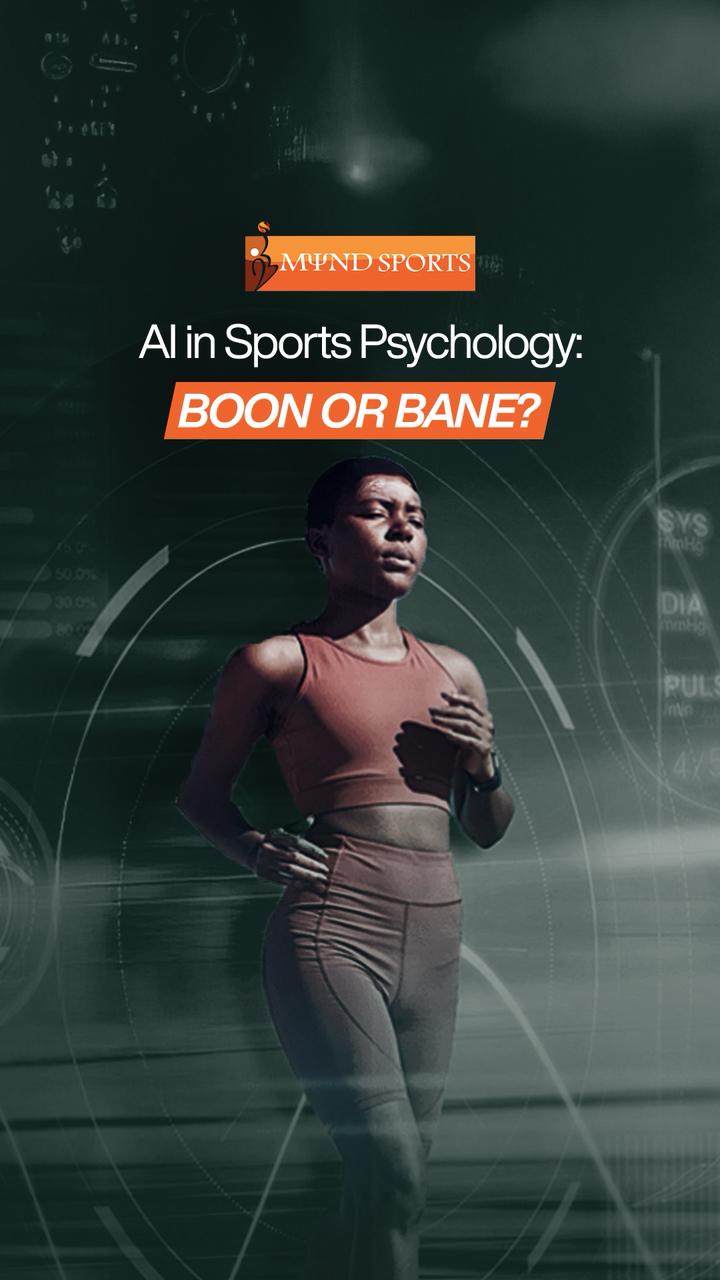
AI in sports counselling and coaching is fast expanding, altering performance analysis, injury prevention, and mental preparation with data-driven, real-time insights. Wearable sensors, computer vision, and predictive analytics tools such as Catapult, Hudl, and Hawk-Eye provide personalized training, reveal hidden performance patterns, and help to avoid burnout. AI-powered apps customize training routines based on daily physiological data and evaluate mental abilities such as reaction time and decision-making. During training or sports, AI gives immediate, objective insights that enable coaches to make faster, more educated decisions than human observation alone.
The locker room of the future isn’t just about physical grit; it’s about digital intelligence. Generative AI is rapidly moving from the back office to the sidelines of sports counseling, offering a “digital twin” of traditional mental and physical coaching. While it promises to unlock new levels of athlete resilience, it also brings a fresh set of hurdles.
Here is a breakdown of the pros and cons of integrating generative AI into the high-stakes world of sports counseling.
The Pros: Why AI is a Game-Changer
- 24/7 Accessibility & Immediate Support: Mental health crises don’t follow a training schedule. AI-powered chatbots provide athletes with instant, private cognitive-behavioral techniques at any hour, bridging the gap when human counselors are unavailable.
- Hyper-Personalized Mental Resilience: Unlike static programs, generative AI analyzes an athlete’s unique psychological profile, stress patterns, and biometric data to create evolving mental training regimens. It can design specific visualization exercises for an athlete struggling with pre-game anxiety or personalized relaxation techniques for burnout recovery.
- Predictive Wellness Monitoring: By integrating data from wearables—tracking heart rate variability, sleep quality, and even vocal tone—AI can identify early warning signs of neural fatigue or depression before they manifest as a physical slump.
- Scalability for Grassroots & Niche Sports: High-level sports psychology has traditionally been reserved for elite pros. AI democratizes this, offering “pretty good” support to millions of amateur or rural athletes who would otherwise have zero access to mental health guidance.
The Cons: The Flags on the Play
- The “Empathy Gap”: AI lacks moral reasoning and the ability to read non-verbal cues. A chatbot can provide a coping tool, but it cannot replace the essential therapeutic alliance—the human connection and deep trust built between a counselor and an athlete. It cannot provide the emotional support and the human touch which is a crucial aspect of any counselling process. Moreover, it misses out on the non verbal cues that a counsellor can judge from the client’s body language and facial expressions.
- Data Privacy & Ethics: Counseling involves highly sensitive information. Use of AI requires feeding data into the system to get accurate results. There are significant concerns that biometric data or psychological evaluations could be accessed by teams or sponsors to exclude athletes from contracts or competition based on predicted “mental fragility”.
- Algorithmic Bias: If the AI is trained on data from a specific group (e.g., elite male professional players), its advice may be inaccurate or even harmful when applied to female athletes, youth players, or those from different cultural backgrounds.
- The Risk of “Hallucination” and Accuracy: Generative AI can sometimes produce “hallucinations”—confidently stating false or medically unsafe information. In a high-pressure clinical setting, an incorrect recommendation for a stressed athlete could have serious real-world consequences.
The Bottom Line
With the increasing trend of AI usage, it is crucial that athletes as well as the professionals understand its limitations. Excessive usage of AI without the guidance or supervision from human professionals could lead to negative effects on the athletes mental health. Moreover, even professionals need to be careful while taking help of AI in designing interventions for their athletes, making sure that it is used only as a reference without relying on it completely. The most effective future for sports counseling isn’t AI instead of humans, but AI as an adjunct to them. While technology can handle the data-heavy lifting and provide round-the-clock “first-aid,” the human counselor remains the primary decision-maker, providing the empathy and clinical judgment that no machine can replicate.